How It Works:
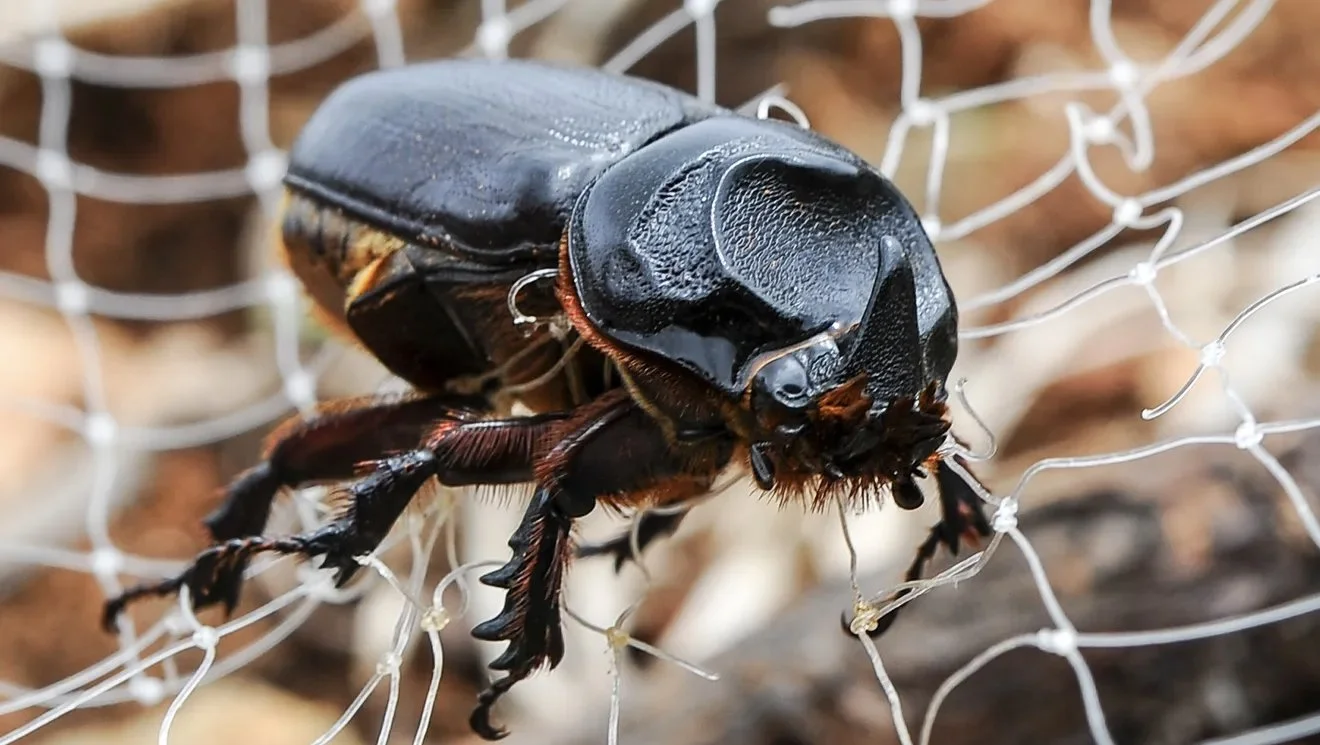
Fine monofilament netting both blocks access to the crown
and traps adults coming or going: the thin strands snag on the beetle’s prothorax , entangling it until it dies. Netting is most feasible for low-bearing trees that can be easily managed.
Where To Use Netting:
Palm crown protection:
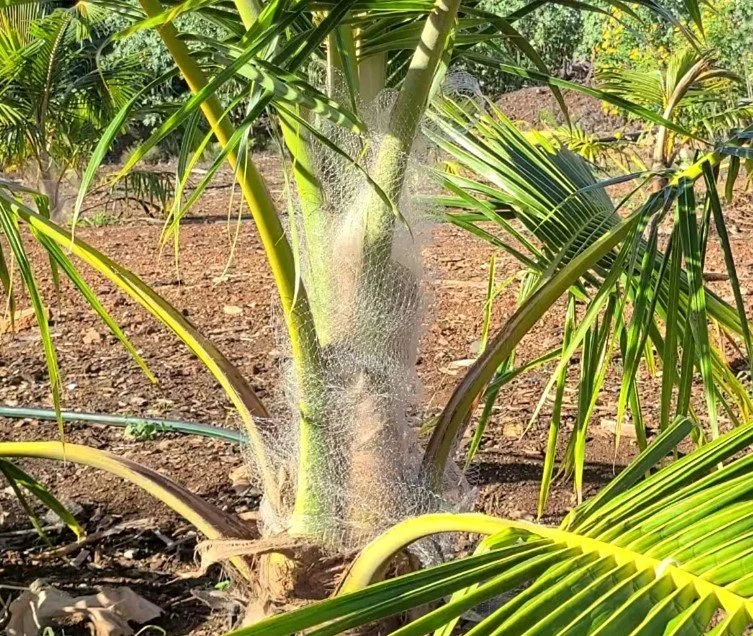
Drape and loosely wrap around the growing point (spear area) at the top of the stem. As the palm grows, re-position the netting so new fronds can emerge freely.
Green-waste containment:
Cover or wrap chips, compost, husks, logs, and other green waste to keep emerging adults from escaping and to prevent new beetles from entering.
See our Green Waste, Plants, & Soil page for more information.
Trap construction:
Use netting as the capture medium in bucket or frame traps to increase interception.
Netting Specs for Trees and Mulch
Source: Alberto Ricordi and Joshua Silva
Please Note:
Plastic tarps/sheeting and weed cloth do not stop adult beetles; they chew through or slip under these materials.
(See video by Lance Thomas.)
Netting is most effective when combined with sanitation (see our Green Waste Management Page) and monitoring traps.
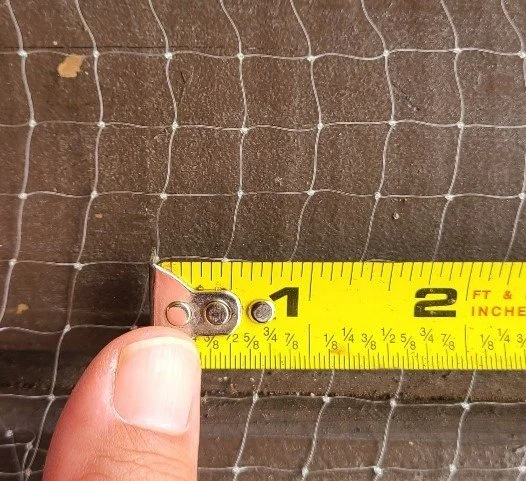
Mesh: ~½-inch square (≈12–13 mm)
Twine thickness: ~0.33 mm
Material: Monofilament nylon (fishing-net style)
Sources for Suitable Netting
CRB Action Kauai is working with a number of partners to make protective netting and traps available at no cost to property owners and community partners. Please check this website for updates on those discussions or join our mailing list to receive news on any developments. In the meantime:
MEMPHIS: 1-888-674-7638 — memphisnet.net
LEE FISHER: 1-800-356-5464 — leefisherfishing.com
BRUNSON: 1-251-943-6911 — brunsonnet.com
Tree Netting
Source: Alberto Ricordi and Joshua Silva
STEP 1: TRIM
Trim off old branches/flowering parts that may tangle the net during wrapping.
STEP 2: WRAPPING
You will need to fully cover entry points and prime feeding zones (Fig. 1 below) which are typically between the lowest/oldest and highest/youngest fully-expanded leaf frond.
Wrap bundle of net around the inner crown twice, before weaving up the next frond layer (Fig. 1 below).
• Net length: measure a length approximately twice the height of the feeding zone needing protection.
• No zipties are required—they can create gaps as fronds grow (Fig. 2).
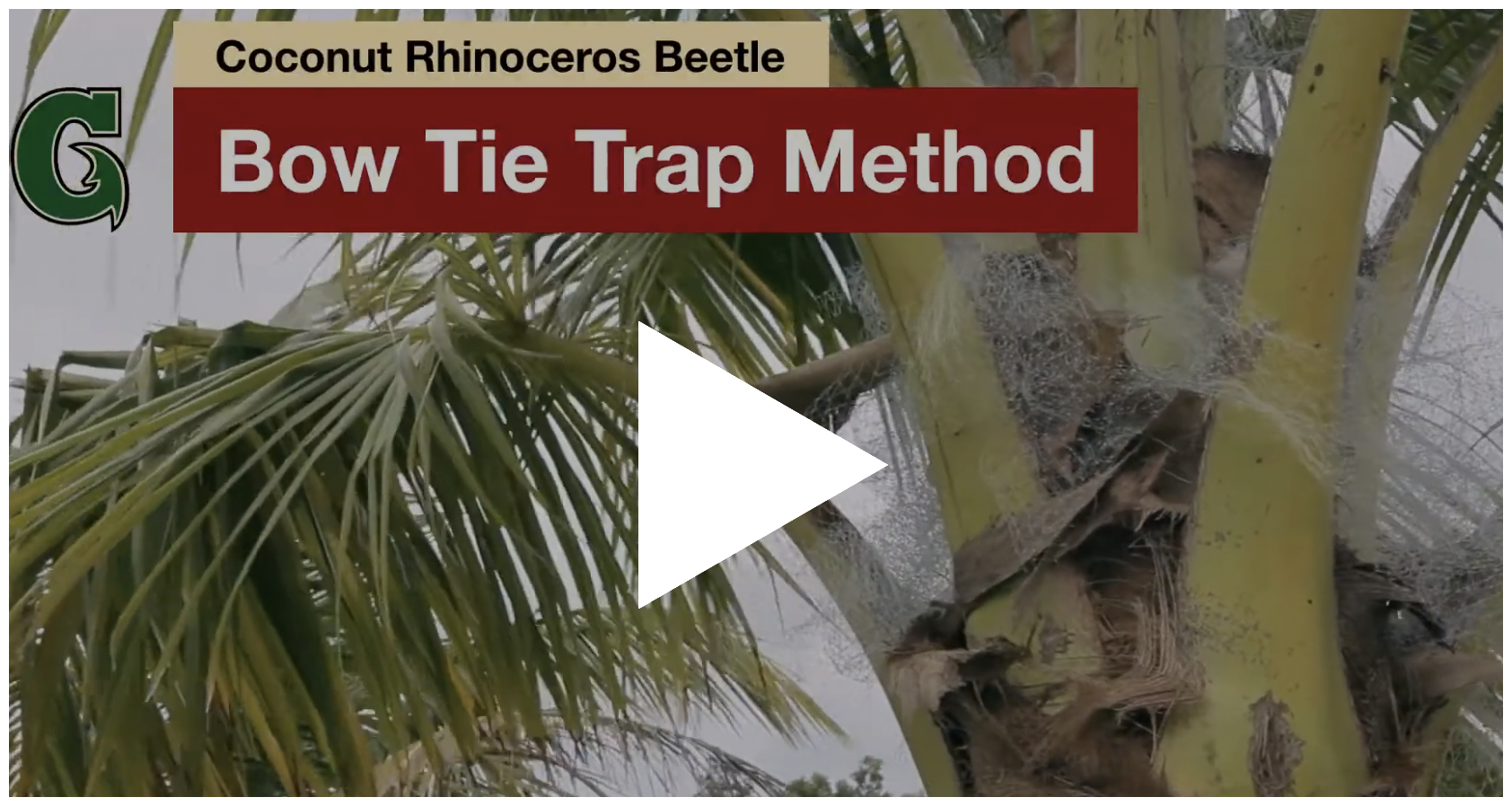
• Other techniques include the Bow-Tie method, see video below, developed by the University of Guam (2015) and netting the whole tree. However, we have not evaluated the effectiveness and labor of these methods yet.
• Ensure no gaps are in the net wrapping (Fig. 2).Keep the net “fluffy.” This will increase the likelihood of tangling and catching CRB.
Fig 1. DO: Proper Netting
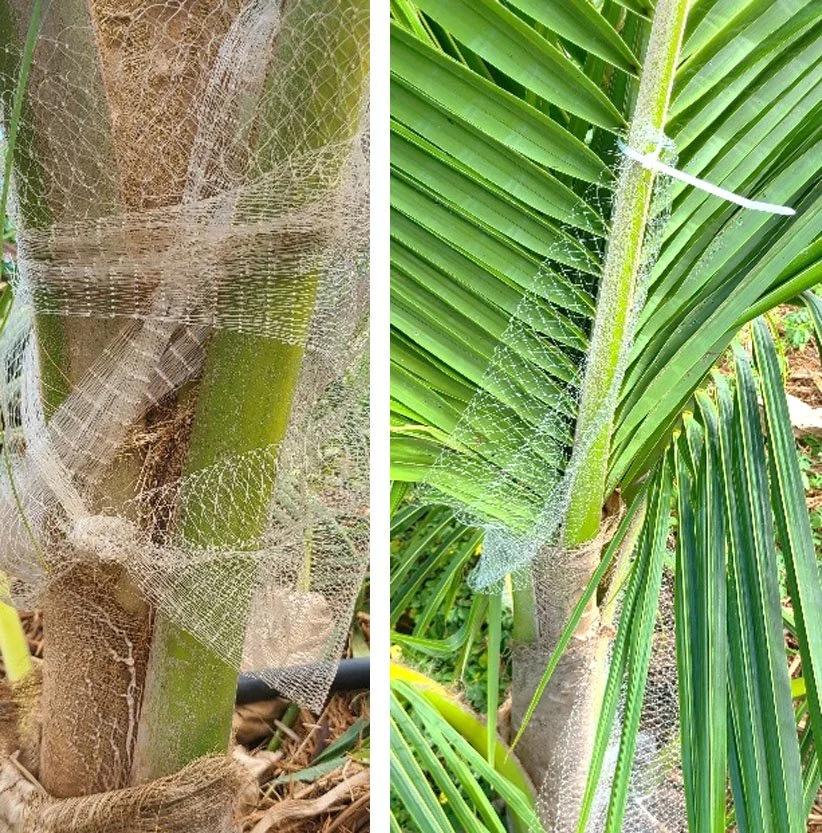
❌ Fig 2. DON’T: Poor Netting ❌
Keep your netting “fluffy”!
Watch a video on Bow Tie wrapping for further understanding of “fluffy” netting application:
STEP 3: MAINTENANCE
• Readjust the net wrapping at least monthly. The tree will grow, creating gaps. This makes netting traps labor-intensive.
• Replace if strands are getting brittle or torn.
Mulch Netting
A Guam study found netting mulch piles caught 25x more CRB adults than pheromone traps and other trapping methods (Moore et al. 2014). Netting mulch piles and debris, along with other practices (e.g., avoid storing infested mulch, Mr. Lance’s Steam, etc.) can prevent CRB from breeding
Information and photo source: Alberto Ricordi and Joshua Silva
STEP 1: PREPARE PILE HEIGHT
If you can’t eliminate mulch from your area, minimizing mulch pile thickness to 2 inches or less is critical.
STEP 2: COVER WITH NETTING
See our Green Waste Management Page for more information.
As seen in Fig. 3 below, one “fluffy” layer of ½” monofilament netting is an adequate barrier that catches both CRB adults entering or exiting mulch piles. Once caught, CRB adults desiccate and die in the sun.
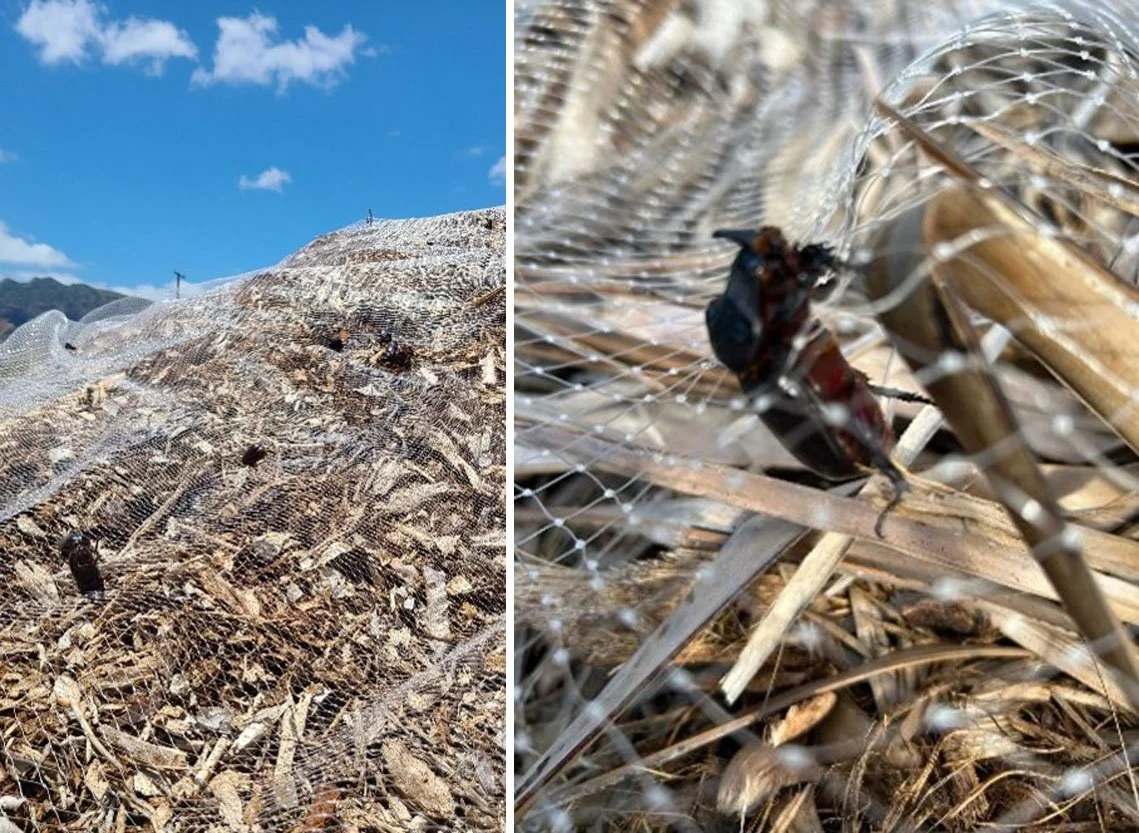
Fig 3: Trapping CRB in netting
STEP 3: MAINTENANCE
• Replace netting if strands are getting brittle or torn.
Further Reading
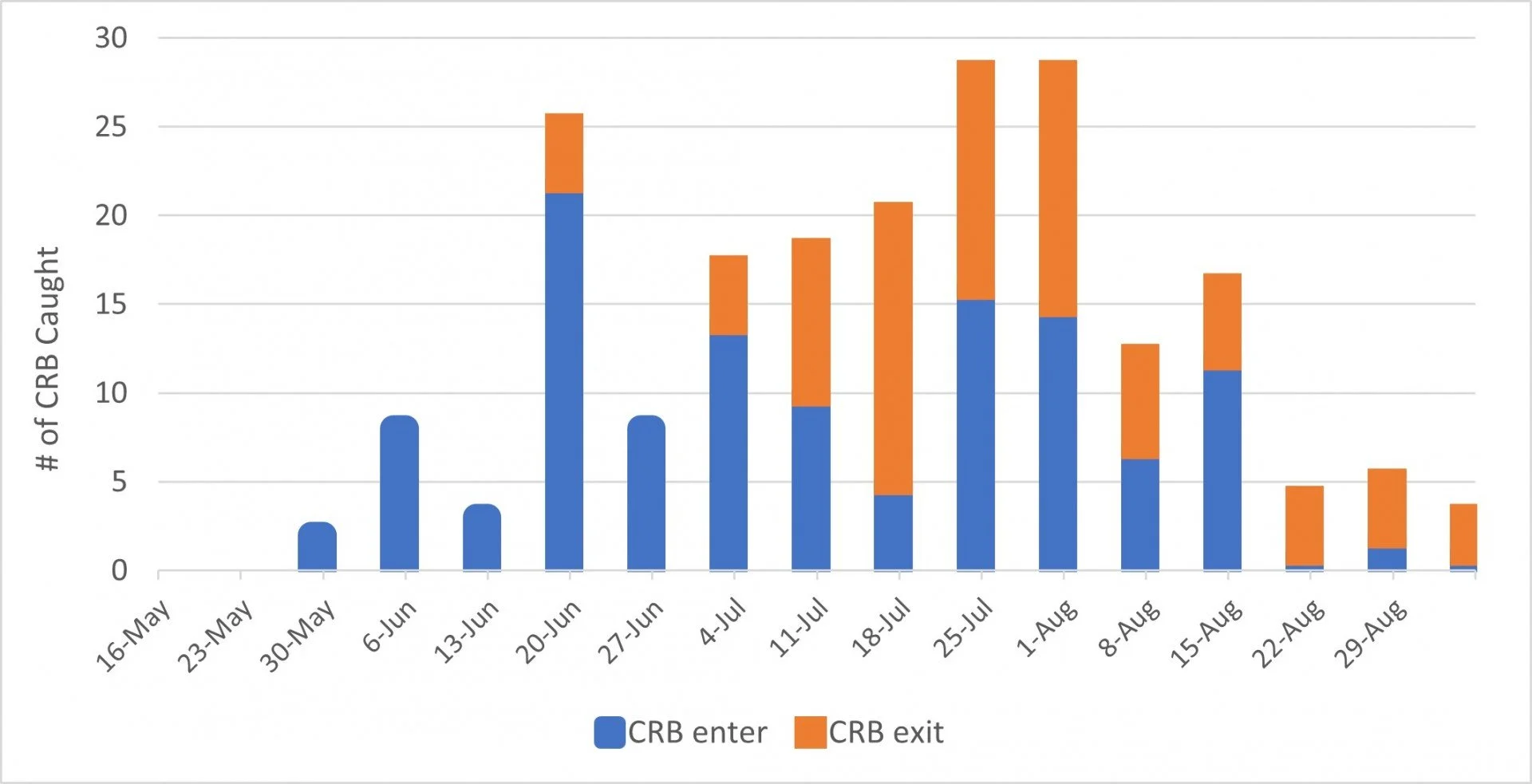
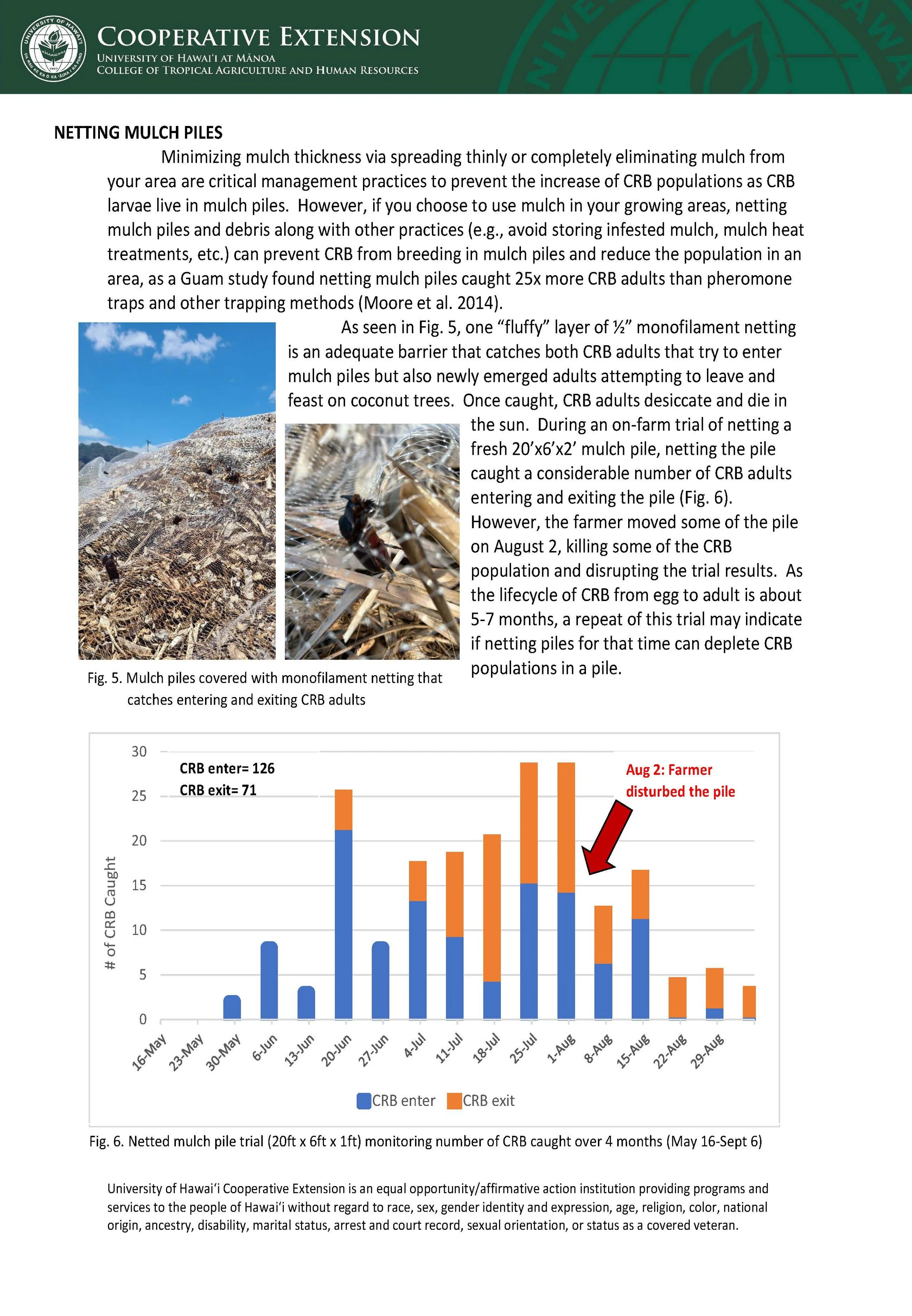
Netted mulch pile trial (20ft x 6ft x 1ft) monitoring number of CRB caught over 4 months (May 16-Sept 6) (Source: Silva, 2023).
University of Hawai’i at Manoa
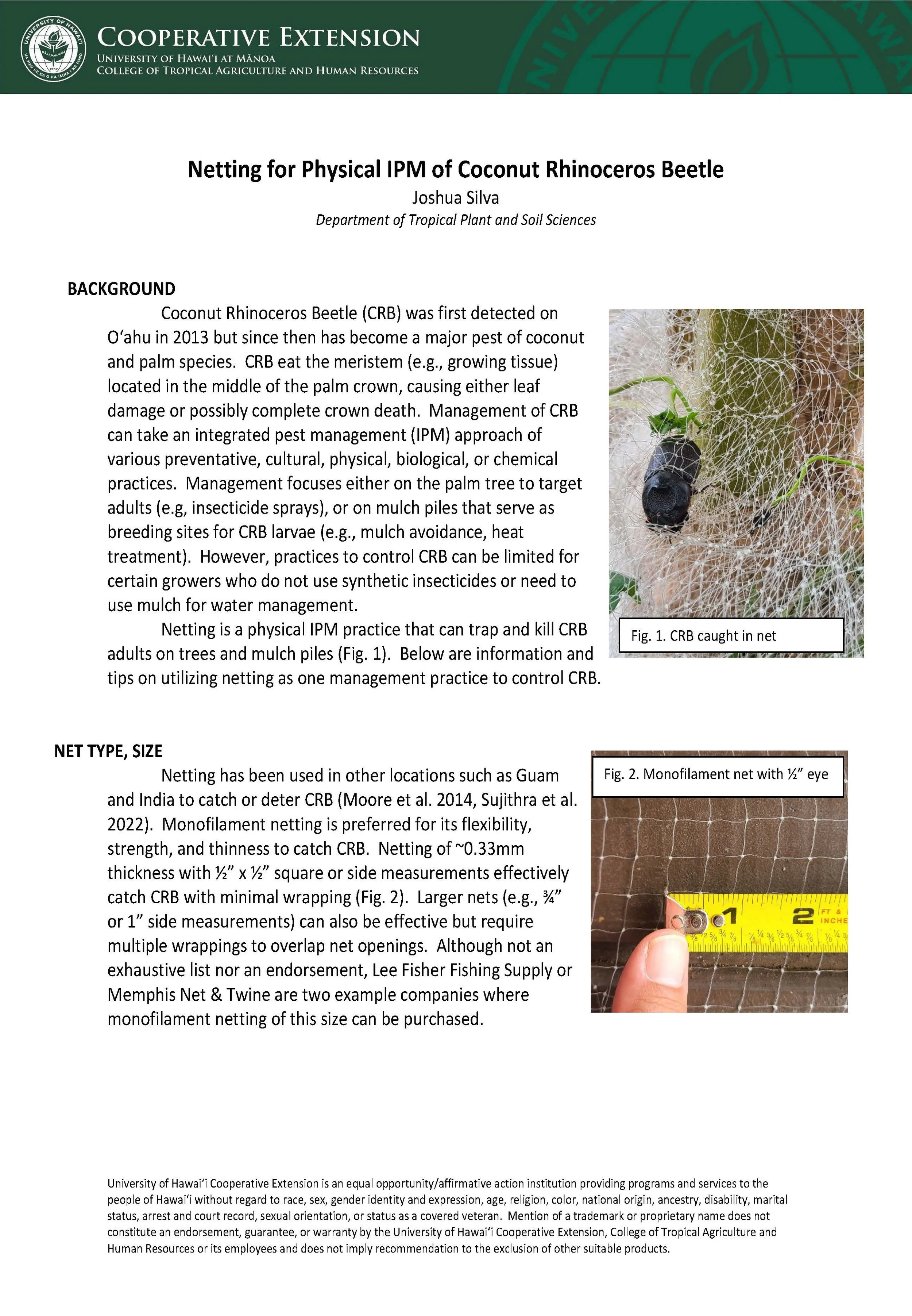
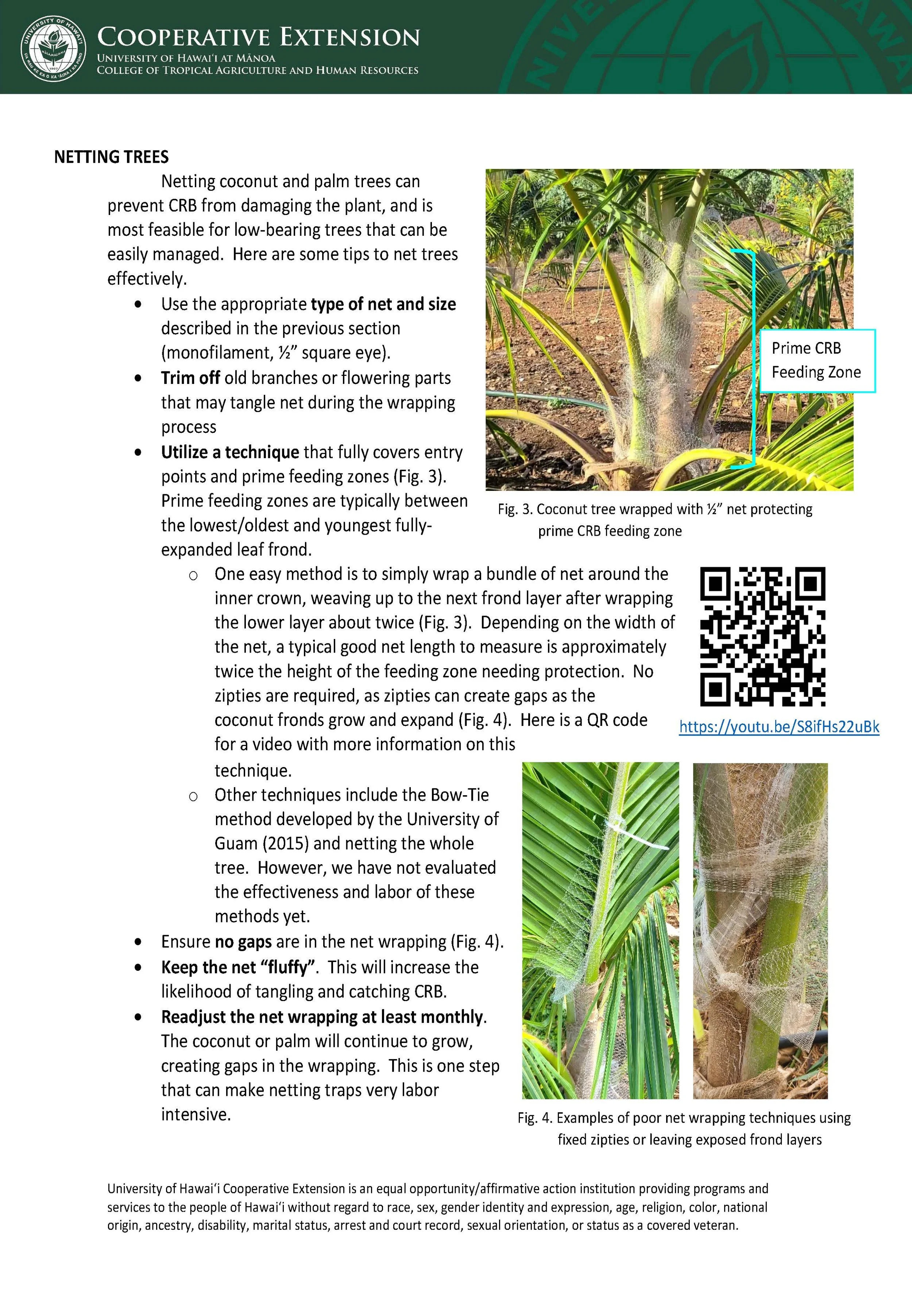
Netting for Pest Management
From the Dept. of Tropical Plant and Soil Sciences by Joshua Silva
Click on the thumbnails below to view all 4 pages.