
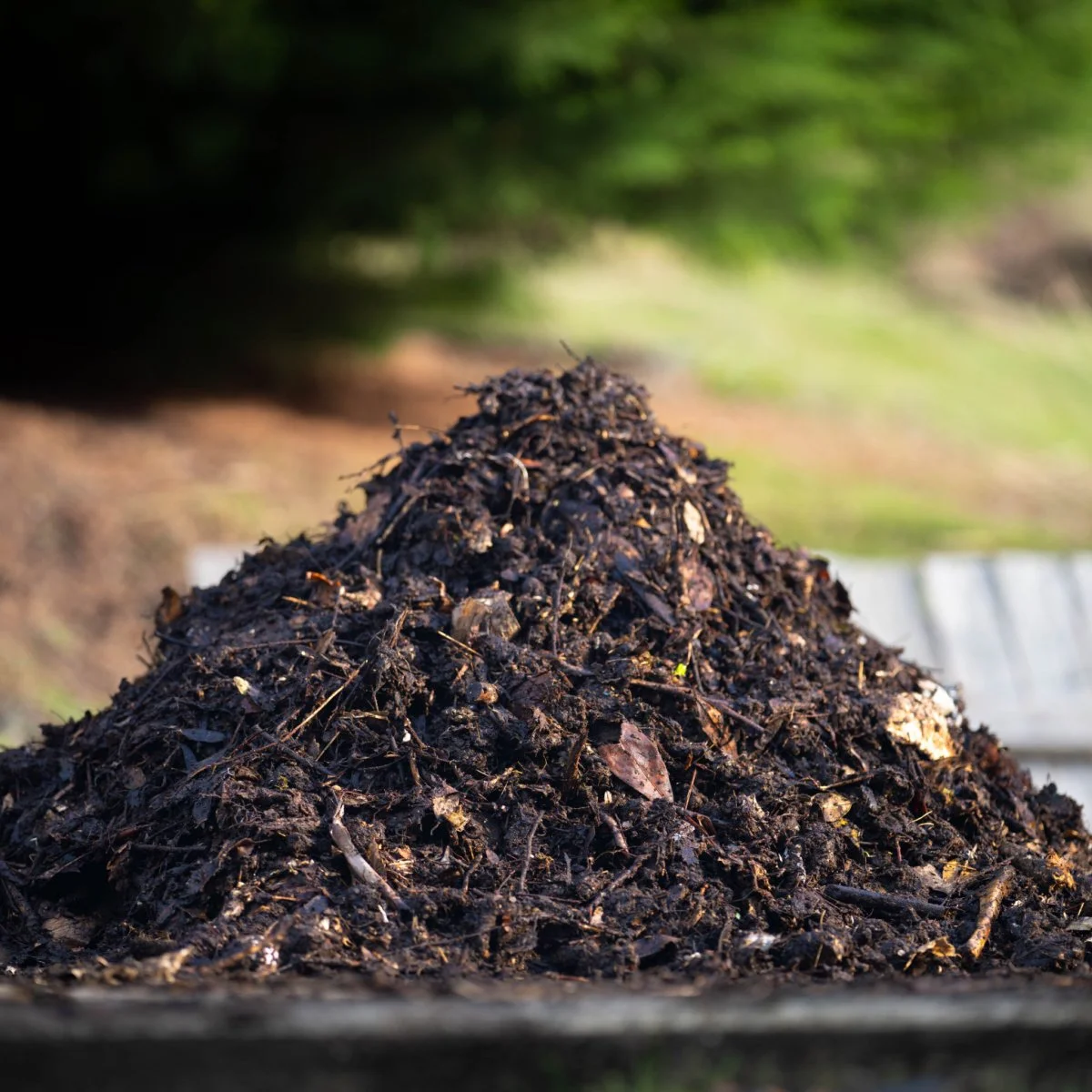
Manage Green Waste, Local Plants & Potting Soil
CRB breed in any decaying, moist, nutrient-rich organic matter, and larvae thrive just under the soil below the piles. Managing green waste on our properties can help prevent CRB breeding sites.
Managing Green Waste and Mulch
Do Coconut Rhinoceros Beetles (CRB) breed in cool (below 140°F) compost and mulch piles, even if they are turned every four months?
Yes — they can, and they almost certainly will. If your compost pile remains below 140°F and is only turned every four months, it provides ideal conditions for CRB breeding.
CRB thrive in:
• Cool (70–90°F), moist, decomposing organic matter
Undisturbed piles where they can complete their full life cycle undisturbed
Piles over 2 inches high—unless they are managed routinely, with methods such as turning, netting, and/or steaming.
CRB eggs hatch in 1–2 weeks, and larvae mature into adults in about 10–14 weeks (2½–3½ months).
If you turn the pile only once every 4 months, each generation can mature and fly out before the next turn.
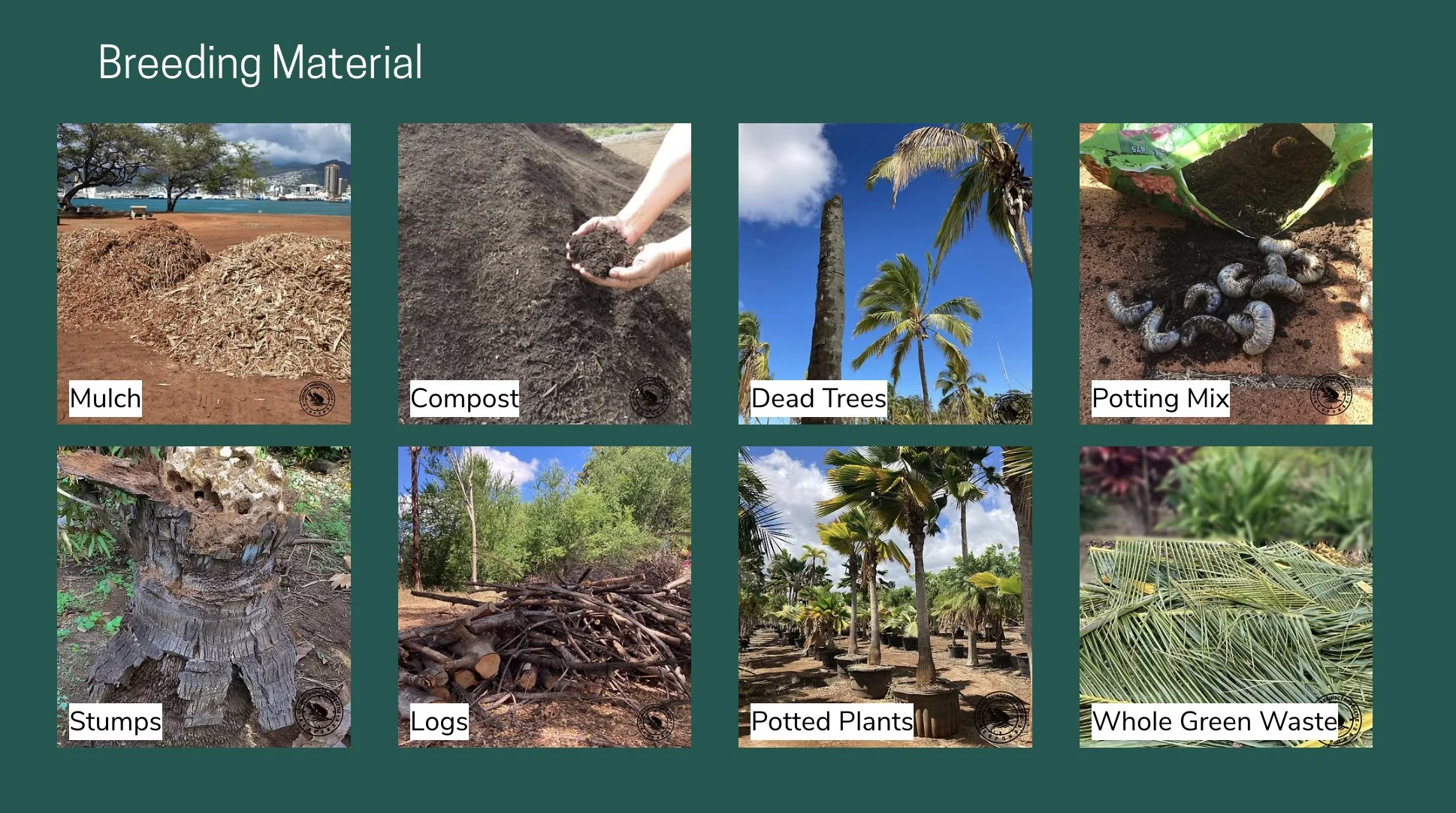
How to Eliminate CRB Breeding Sites
Removal:
Whether you choose to remove or manage greenwaste, remove all dead coconut palms and logs, aka "beetle bait." For best results, remove green waste & compost piles.Pile Maintenance:
Keep piles shallow, dry, and turn weekly or every 2 weeks (not every few months!).Pile Size and Netting:
• Keep pile sizes under 2 inches high so they heat evenly.• For piles greater than 2 inches high, follow our netting page instructions). Properly netted piles effectively trap and kill beetles entering and emerging.
• NOTE: Plastic tarps etc do not block beetles.
Temperature Monitoring:
Check internal temperature with a compost thermometer. If piles are not steaming hot, rely on frequent turning and netting to stop breeding.Inspect and Destroy:
Inspect piles frequently for larvae (eggs are nearly invisible). Remove larvae or beetles, if any, and drown, burn or freeze them.
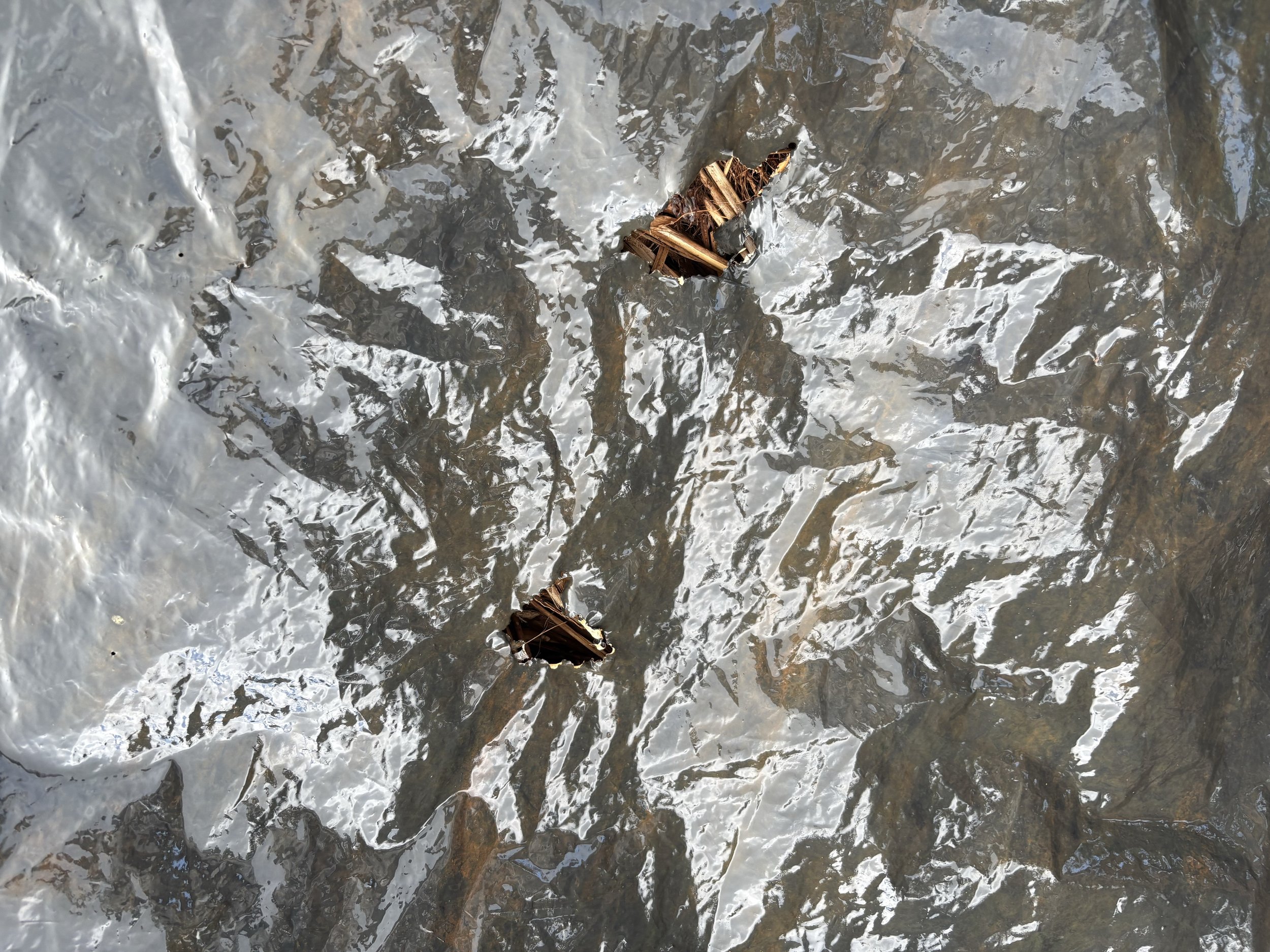
Holes in plastic tarp chewed through by CRB. CRB can bore through anything, except 1/2” netting.
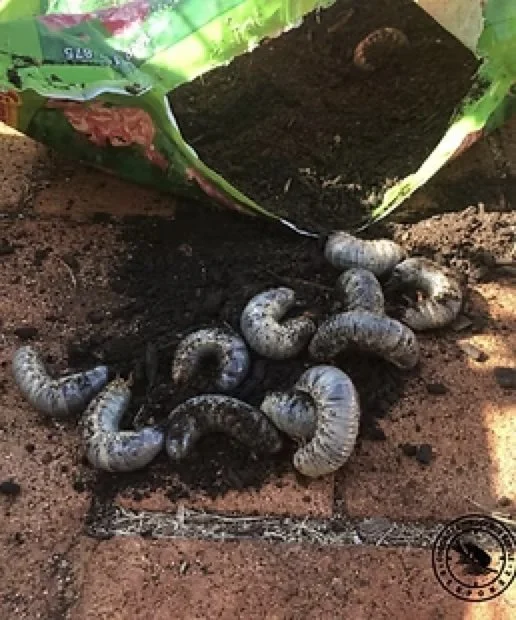
CRB larvae in a bag of potting soil.
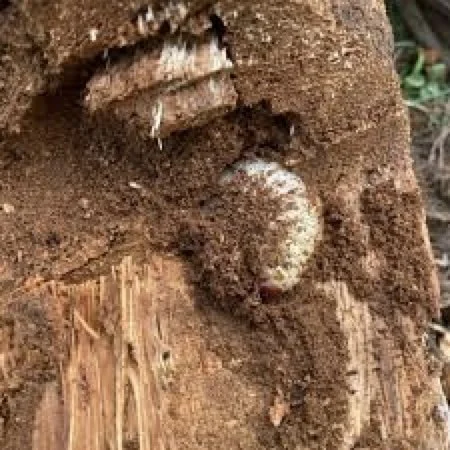
CRB breed in decaying logs.
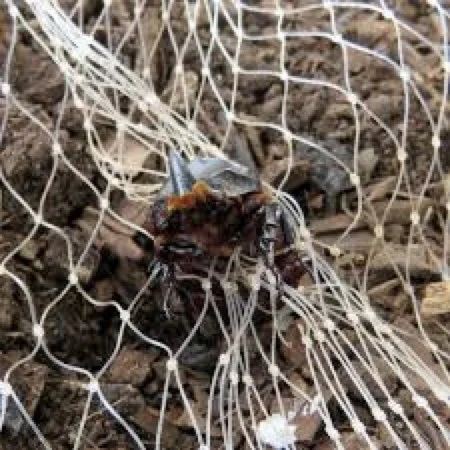
Use netting over mulch piles. CRB get caught in the netting and die.
TURN RATE:
Every 4 months
🔴 Very High CRB Risk
Perfect breeding site; full CRB life cycle completes between turns.
TURN RATE:
Monthly
🟠 Moderate CRB Risk
Some larvae destroyed, but many survive.
TURN RATE:
Weekly/Bi-weekly
🟢 Low CRB Risk
Disturbs larvae before pupation; prevents emergence.
PILE TEMP. CONTINUOUSLY 135º+ FROM TOP TO BOTTOM
✅ Very Low CRB Risk
Kills eggs, larvae, and pupae outright.
Summary
Think: moist + organic + not turning = CRB nursery. They will breed in any decaying, moist, nutrient-rich organic matter, and larvae thrives in the soil layer just below piles—not just coconut palm debris, though that is the worst.
To prevent infestation:
• Keep piles hot (≥140°F)
• Turn weekly to biweekly, and
• Keep piles covered with our netting instructions to block adult entry.
Additional Reading
Source: Brown Cannon, Save Hawaiian Palms
Managing Local Plants & Soil
CRB Prevention Tips
When Buying Local Plants
You should assume some risk exists with soil and potted plants.
Female beetles may lay eggs in the soil, and eggs are extremely difficult to detect. Steps to reduce risk when bringing plants home:
1. Check the nursery’s record: Look online for reports of CRB activity. Chances are, it’s present.
2. Remove the plant from its pot immediately upon getting it home. Place the nursery soil into a sealed black trash bag. If you find larvae, destroy them immediately.
3. Wash the roots gently with water to remove any remaining soil
4. Re-pot the plant using clean potting soil imported from the mainland or from a trusted source.
5. Treat the nursery soil:
A. Spread it in a thin layer inside the sealed black bag.
B. Place the bag on concrete in direct sunlight for at least 3 days. Solar heating can raise soil temperatures high enough to kill eggs and larvae.
Note: Research and USDA guidance suggest CRB eggs and larvae are killed at 122–131 °F (50–55 °C ) for several hours. Composting protocols in Hawaiʻi recommend piles reach 131 °F (55 °C) for 3+ days to ensure mortality.