
Pyrethroids for CRB: What You Need to Know
Confused about pyrethroids? Which ones can you use yourself? Which require a certified applicator? What’s the difference between pyrethrins and pyrethroids? And what if you want to eat your coconuts? Here’s what we know — and what we’re still working to find out.
Pyrethroids for CRB: What You Need to Know
Pyrethroids are one of the tools being used to protect coconut palms from Coconut Rhinoceros Beetle (CRB). They are contact insecticides applied to the crown of the palm, particularly around the bases of the fronds and the spear where CRB enter and feed.
Unlike systemic insecticides that are injected into the palm and move through its tissues, a pyrethroid crown treatment is applied to the surfaces where the beetle is likely to encounter it.
There are several products being used or discussed for CRB in Hawaiʻi, and they are not interchangeable. Some can be applied by a property owner. One requires a certified applicator. Some are limited to ornamental palms. And one is the pyrethroid option identified for coconuts grown for fruit production.
Which Product Can I Use?
(Click to enlarge)
Pyrethrins and Pyrethroids Are Not the Same Thing
The names sound almost identical, but there is an important practical difference.
Pyrethrins are naturally derived insecticides. EverGreen Pyrethrum Concentrate is an example. They can kill CRB on contact, but they break down relatively quickly in sunlight and weather and therefore do not provide the same continuing protection in the crown.
Synthetic pyrethroids were developed to last longer. Products such as Demand CS, Demon Max and Mustang Maxx can leave a residual treatment in the crown so that a beetle arriving after the treatment may still encounter the insecticide.
That distinction is important if your objective is not simply to kill a beetle that may be in the palm today, but to help protect the palm against the next beetle that arrives.
Can I Apply It Myself?
For products that do not require a certified applicator, yes — provided the product label permits the use at your particular site.
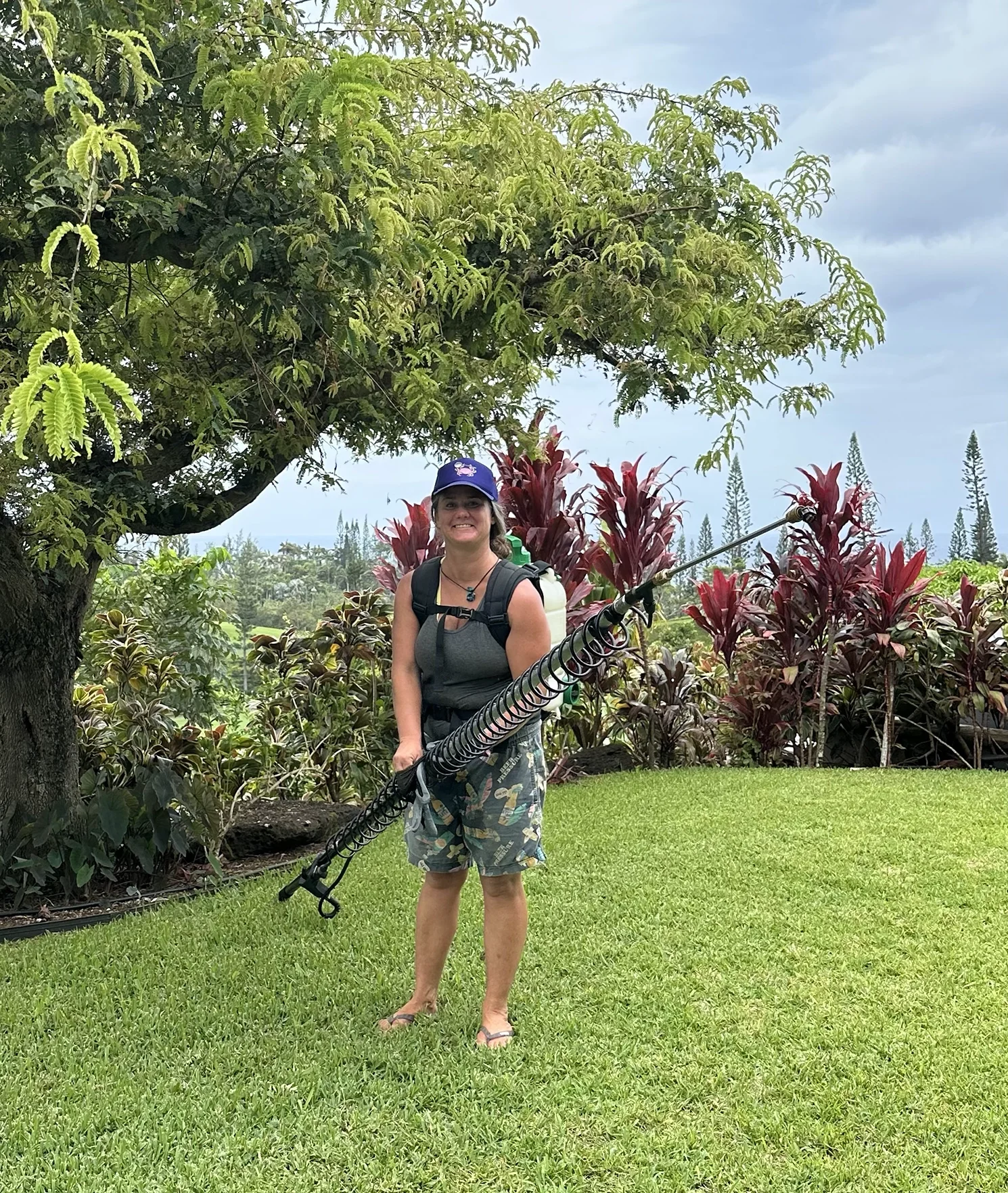
A battery-powered backpack sprayer can be used to direct the treatment into the center of the crown and around the bases of the fronds. The objective is not to spray all of the foliage. You want to get the treatment where CRB enter the palm.
Reaching the crown becomes more difficult as palms get taller. Some backpack sprayers have a spray reach of approximately 30 feet. The FlowZone Typhoon 3 listed on our website can also be used with extension equipment, with a claimed combined reach of up to 54 feet.
More reach does not necessarily mean that every tall palm can be treated safely or accurately from the ground. Follow the pesticide label, use appropriate protective equipment, and avoid conditions where pesticide can drift onto people, animals, neighboring property, water, flowers or fruit.
See our sprayers and extension equipment here:
Materials & Tools.
What About Eating the Coconuts?
This is an important question — and one for which we don't yet have all the scientific information we would like.
Systemic insecticides are designed to be taken up into the palm and move through its tissues. Pyrethroid crown treatments are different. They are applied to the crown rather than injected into the tree, and the treatment should be directed to the bases of the fronds and central crown rather than unnecessarily spraying coconuts, flowers or foliage.
What we have not yet been able to establish is how much, if any, of a pyrethroid applied as a targeted crown treatment ultimately reaches the coconut water or meat.
The pesticide label determines whether a particular product may legally be used on coconuts intended for consumption. At present, Mustang Maxx is the pyrethroid option identified for coconuts grown for fruit production, and it is a Restricted Use Pesticide requiring a certified applicator.
For products that are not labeled for edible coconuts, do not assume that a targeted crown application or washing the coconut makes the fruit acceptable for consumption. Follow the product label.
We’re Working to Get a Better Answer
CRB Action Kauaʻi is actively seeking the scientific information behind this question.
We want to know whether coconut water and coconut meat have actually been tested for pesticide residues following targeted pyrethroid crown treatments, and, if not, whether this is research that should be undertaken in Hawaiʻi.
As we learn more, we will update this information.
The Bottom Line
Pyrethroid crown treatments can provide an important layer of protection for coconut palms under CRB pressure. The key is choosing the right product for the situation, getting the treatment where the beetle enters the palm, and following the label — particularly when coconuts are being grown for food.
For equipment and sources: Materials & Tools
For information about other ways to protect your palms: Control Methods